Stolen Time with RS Thomas

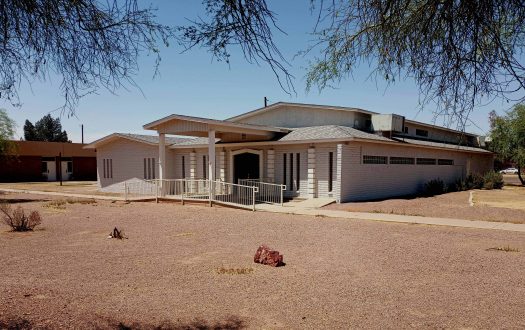
HIS HOME WAS a small, whitewashed stone cottage just off the road next to Plas Y Rhiw manor. A fat seagull stood on the chimney pot and Cartref R.S. Thomas was written in chalk on the door when I knocked.

Quote 3 The old dragon finally appeared. "Yes?" he barked, his lower lip quivering in anger.

I explained who I was and he immediately asked me if I was still working for The Times. No, no Mr Thomas. Are you with The Western Mail then? Well, a bit Mr Thomas.

What do you mean a bit? Are you with them or not? I knew that I would never get into his house with my Western Mail hat on so I immediately fell back on a lie.

What I was hoping for, I blustered on as he continued glowering at me, was that you might give me ten minutes since I am working on the history of the Llyn.

I do not speak to the English media and it's not the Llyn but Llyn. You English are always getting it wrong.

I'm sorry Mr Thomas but ten minutes would be very, very helpful. About the history of the area. For a magazine.

Right, ten minutes. And not a second more.


I COULDN'T BELIEVE I'd actually got into the house but there he was leading me into the back room of his marvellous cottage with its books and bare floorboards, a huge inglenook fireplace and a lot of sheep skulls laid out on a chest.

There was no sign of a television or newspapers but I did spot a portable radio. He warned me to watch my head as we both stooped into a back room where he put a chair out for me. Well, well, this is very nice isn't it Mr Thomas?

He began by complaining that he had been misquoted when it was said that he had been urging the Welsh to daub slogans on – or set fire to – English homes. But the English media were all the same weren't they? They were only interested in sensationalism and he tried not to take much notice but, at times, it was difficult.

"I still write about what it's like to live in this area, the tension between the old life and the way it's being threatened by the contemporary world, media exploitation and second homes. The trouble is I still have to use English for my poems. I can't seem to manage to write poems in Welsh but I have been writing some Welsh prayers lately."

Even though he had been retired for 14 years then he had just started taking services in the local church since otherwise it would have to have closed. "But hold on a minute." That big forefinger of his rose up and pointed directly at me. "What's all this got to do with the history of Llyn?"

Just background Mr Thomas, I babbled inanely. Just a little background.


Quote 4 I SOON LEARNED his reputation for startling rudeness was completely justified since he was soon denouncing the pilgrimage book I had sent him as "Anglicanised media rubbish."

But it won a national award, I replied, pained. Oh they give out awards for any old rubbish these days.

But he did seem quite happy when he was pattering on about the history of Llyn and our "ten minutes" stretched to half an hour when I asked him why had recently agreed to appear on the "Anglican media" otherwise known as The South Bank Show, particularly as he had emerged on the same week as I had wanted to talk to him for The Times.

Hah, he said. They had offered him thousands of pounds and he was not a wealthy man. Oh so he will talk to the hated Anglican media for thousands of pounds but not for nothing. Well at least we now know. I know I have lots of contradictions, he did say at one point. All this I know.


BUT HE WASN'T quite as truculent as I had expected and, after I left him, I went down to Aberdaron to have a cup of tea only to find that the Y Gegin Fawr restaurant – or The Big Kitchen – was shut. Here the pilgrims of old could claim a free meal before making their journey over to the island of Ynys Enlli.

The island itself was basking in a gorgeous red sunset but, even so, I was still depressed by a lot of what old R.S. had told me. It wasn't so much his admitted inconsistencies – which is what you might expect from batty old poets – and neither was it his petty hatreds since we've all got too many of them.

Talkback What really got up my trumpet was that this disappointed romantic had always been so amazingly influential and you can go to almost any eisteddfod and find half a dozen grizzled R.S. clones all busy snuffling in the trough of despair, all banging on about how everything Welsh has been ruined by those awful English. Such attitudes are the very incubus of the wall dauber and petrol bomber.

All this pin-headed tribalism is not the Welsh way and it certainly has nothing to do with the Path of the Cross.

The Welsh grew out of long traditions of kindness and hospitality to strangers no matter what their language. Love has always been at the heart of the Welsh way and, not for the first time, I reflected in that brilliant pilgrim sunset, that those who claim to speak for us are often precisely those who are also leading us straight into the gathering storm.


Tom Davies has worked as a seaman in the merchant navy, as a social worker in New York's Lower East Side, and as a Fleet Street journalist. Now a freelance writer living in Penarth in Wales, he is the author of 13 books, including "The Man of Lawlessness", "Landscapes of Glory" and "The Celtic Heart". Click here to visit Visions of Caradoc, Tom's website.

Top | Archive | Previous Page | SOF Home

Text © Tom Davies 2000
Page © Ship of Fools 2000